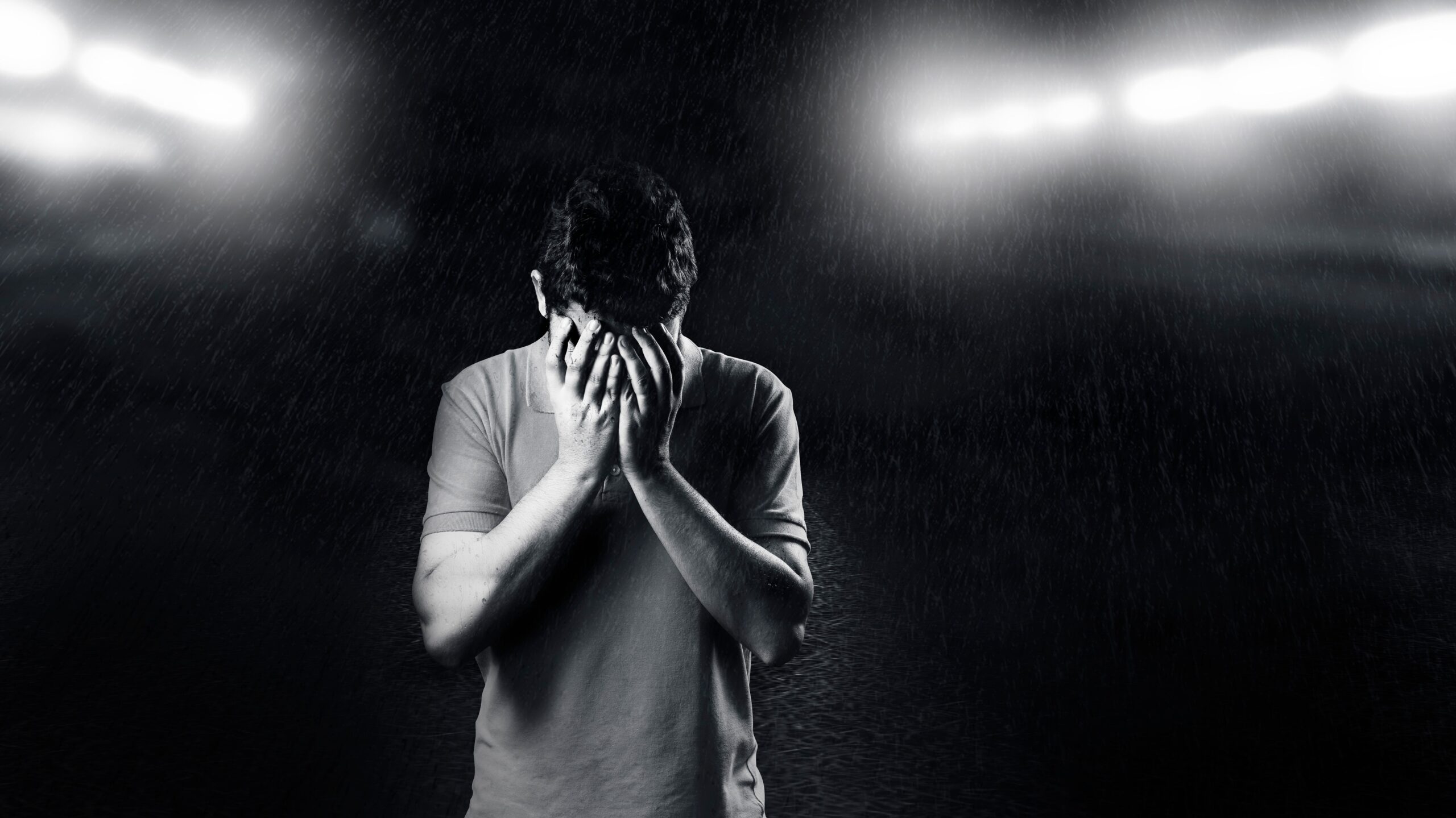
Why Singapore Men Struggle in Silence — And What Needs to Change
June is Men’s Mental Health Month. Additionally, it is a good time to pause and ask: how are the men around us, really?
Additionally, there is a version of strength that many Singaporean men grew up with.
It looks like this: you don’t talk about your feelings. Pushing through, you handle things. Also, you provide. You don’t burden others. Nevertheless, if something weighs on you, you deal with it quietly on your own. Late at night when no one is watching, you handle it.
For a lot of men, this is not a choice. However, it is simply the water they have always swum in.
But here is what the research — and the counselling room — keeps showing: that kind of silence has a cost.
The Numbers Behind the Silence
Men are nearly four times more likely to die by suicide than women (American Foundation for Suicide Prevention, 2023). Yet they are significantly less likely to seek help for depression, anxiety, or stress-related struggles (Galdas et al., 2005).
In Singapore, this pattern is compounded by cultural pressures that are uniquely our own. The expectation to perform well academically, to serve, to succeed professionally, to be the steady one at home — these are not small things. They accumulate.
A 2019 IMH survey found 1 in 7 people in Singapore have experienced a mental health condition.
However, men made up a significant portion of that number, but were far less likely to have sought professional support.
What stops them?
Research consistently points to a cluster of barriers (Seidler et al., 2016):
- Stigma — the fear of being seen as weak, broken, or “less of a man”
- Self-reliance — the belief that needing help is a personal failure
- Emotional illiteracy — genuinely not having the language to name what they are feeling
- Practical barriers — not knowing where to go, or assuming therapy is “not for people like me”
In Singapore, add to this the cultural norm of saving face — the reluctance to let anyone, even a professional, see behind the curtain.
What “Struggling in Silence” Actually Looks Like
Men’s mental health struggles often do not look the way we expect.
We tend to picture someone crying, withdrawn, clearly distressed. But for many men, it shows up differently:
- Increased irritability or anger that seems to come from nowhere
- Throwing themselves into work or exercise to exhaustion
- Pulling away from family and friends without explanation
- Increased use of alcohol, pornography, or other numbing behaviors
- A vague sense of emptiness or meaninglessness — sometimes described as “just going through the motions”
- Physical symptoms: headaches, back pain, fatigue, poor sleep
This last point matters more than people realize. Men are significantly more likely to present with physical complaints when they are emotionally struggling (Cochran & Rabinowitz, 2000). If a man keeps saying “I’m just tired,” or “my back is killing me,” it may be worth gently asking what else is going on.
The Hidden Link: Compulsive Behaviour and Emotional Pain
One pattern that comes up again and again in the counselling room is the link between unaddressed emotional pain and compulsive behaviour.
When a man has no outlet for stress, shame, loneliness, or grief — when he has been told all his life that those feelings are not acceptable — he will find another way to manage them.
For some men, that looks like compulsive pornography use or compulsive sexual behaviour. Not because they are bad people, or morally deficient. But because these behaviors offer a reliable, private, immediately accessible way to feel something — or to feel nothing — for a little while.
Research on Compulsive Sexual Behaviour Disorder (CSBD) consistently shows that emotional dysregulation, shame, and early relational wounds are significant drivers of the behaviour (Grubbs et al., 2020; Reid et al., 2012). The behaviour is not the root problem. It is a symptom of a deeper unmet need.
This is not an excuse. It is context. And context matters — because it tells us where healing actually begins.
The Father Wound and the Mother Wound
For many men in Singapore, the emotional wounds they carry were not created suddenly. They were laid down in childhood.
Psychologists speak of the father wound — the grief and confusion that comes from having a father who was absent, emotionally unavailable, critical, or harsh. In a culture where many fathers expressed love through provision rather than presence, this is not a niche experience.
There is also the mother wound — relational injuries from a mother who was enmeshed, anxious, dismissive, or neglectful. These early attachment experiences shape how a person relates to themselves, to others, and to their own emotional world for decades.
These are not concepts meant to assign blame. They are frameworks to help us understand why some men find it so hard to be still, to feel, to trust — and why numbing behaviors can feel so necessary.
Healing those wounds is possible. It takes courage, and it takes the right support. But it begins with someone being willing to name what happened.
What Helps: What the Research Actually Says
The good news — and there is good news — is that men do respond to treatment when the approach fits them.
Research suggests that men tend to engage better with therapeutic approaches that are:
- Structured and goal-oriented — not open-ended “talking about feelings”
- Psychoeducational — helping them understand why they feel what they feel, in clear language
- Action-focused — with a sense that they are working toward something, not just sitting with discomfort
- Non-judgmental — particularly around topics like pornography, sexual behaviour, and shame
Approaches like Cognitive Behavioral Therapy (CBT), trauma-informed therapy, and newer approaches such as memory reconsolidation work — including Brain Switch 2.0, developed by Singapore-based clinician Dr Joachim Lee — have shown meaningful results for men dealing with compulsive behaviour and emotional dysregulation.
Community matters too. Men who have even one trusted person they can speak honestly with show significantly better mental health outcomes than those who are entirely isolated (Umberson & Montez, 2010).
That person does not have to be a therapist. It just has to be someone safe.
To the Men Reading This
If you have made it this far — something in this landed for you.
Maybe you recognize yourself somewhere in these pages. Maybe you are thinking of someone you love.
You do not have to be in crisis to ask for help. You do not have to have a dramatic breakdown before your struggles count.
The quiet weight you carry every day — that counts.
The exhaustion behind your “I’m fine” — that counts.
The part of you that wonders if things could feel different — that counts.
Reaching out is not weakness. In Singapore’s high-pressure, face-conscious culture, it takes a particular kind of courage to say: I need support. That is not softness. That is strength of a different, rarer kind.
To the Partners, Friends, and Families
You may be reading this because you are worried about a man in your life.
The most important thing you can do is not fix, not advise, not pressure — but stay present. Research on men’s help-seeking shows that the single biggest predictor of a man seeking support is having someone who has normalized it for them (Addis & Mahalik, 2003).
Saying, simply: “I noticed you seem to be carrying a lot. I’m here if you want to talk” — and meaning it, without agenda — can be more powerful than you realize.
Finding Support in Singapore
If you or someone you know is ready to explore support, here are some starting points:
- Institute of Mental Health (IMH) Helpline: 6389 2000 (24 hours)
- Samaritans of Singapore (SOS): 1-767 (24 hours)
- Sacred Space Counselling — specializing in compulsive sexual behaviour, pornography use, and related relational issues. Visit sacredspacecounselling.org or DM @sacredspacecounselling on Instagram.
You do not have to figure this out alone.
References
Addis, M. E., & Mahalik, J. R. (2003). Men, masculinity, and the contexts of help seeking. American Psychologist, 58(1), 5–14. https://doi.org/10.1037/0003-066X.58.1.5
American Foundation for Suicide Prevention. (2023). Suicide statistics. https://afsp.org/suicide-statistics/
Cochran, S. V., & Rabinowitz, F. E. (2000). Men and depression: Clinical and empirical perspectives. Academic Press.
Galdas, P. M., Cheater, F., & Marshall, P. (2005). Men and health help-seeking behaviour: Literature review. Journal of Advanced Nursing, 49(6), 616–623. https://doi.org/10.1111/j.1365-2648.2004.03331.x
Grubbs, J. B., Hoagland, K. C., Lee, B. N., Grant, J. T., Davison, P., Reid, R. C., & Kraus, S. W. (2020). Sexual addiction 25 years on: A systematic and methodological review of empirical literature and an agenda for future research. Clinical Psychology Review, 82, 101925. https://doi.org/10.1016/j.cpr.2020.101925
Institute of Mental Health. (2019). Singapore Mental Health Study 2016. IMH.
Reid, R. C., Carpenter, B. N., Hook, J. N., Garos, S., Manning, J. C., Gilliland, R., … & Fong, T. (2012). Report of findings in a DSM-5 field trial for hypersexual disorder. Journal of Sexual Medicine, 9(11), 2868–2877. https://doi.org/10.1111/j.1743-6109.2012.02936.x
Seidler, Z. E., Dawes, A. J., Rice, S. M., Oliffe, J. L., & Dhillon, H. M. (2016). The role of masculinity in men’s help-seeking for depression: A systematic review. Clinical Psychology Review, 49, 106–118. https://doi.org/10.1016/j.cpr.2016.09.002
Umberson, D., & Montez, J. K. (2010). Social relationships and health: A flashpoint for health policy. Journal of Health and Social Behavior, 51(S), S54–S66. https://doi.org/10.1177/0022146510383501